

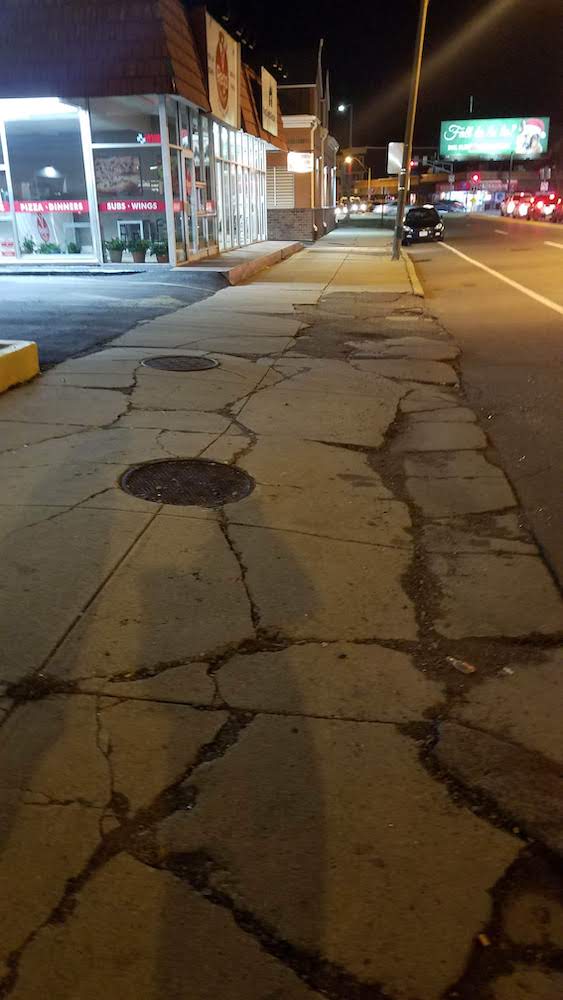
Blue Hill Avenue runs through the heart of Mattapan and Roxbury, connecting thousands of people each day to work, school, shopping, places of worship, and more. But today, the corridor often doesn’t feel as safe or comfortable as it should.
As the busiest bus corridor in the region, serving routes 14, 22, 28, 29, 31, and 45 and carrying more than 37,000 riders every weekday, Blue Hill Ave is essential to how people move. Yet many riders experience slow, unreliable trips, while people walking and biking navigate conditions that can feel unsafe and frustrating.
This vital corridor has the potential to work better for everyone, and with your help, we can make that happen.
What's happening?
- The City of Boston is in the midst of planning for changes along Blue Hill Ave to make it easier and faster to get around. The City recently received federal funding to allow for larger changes, like center-running bus lanes. There will be upcoming public meetings and other events to share your input, so keep an ear out and make sure to show up to share your point of view.
Project Highlights
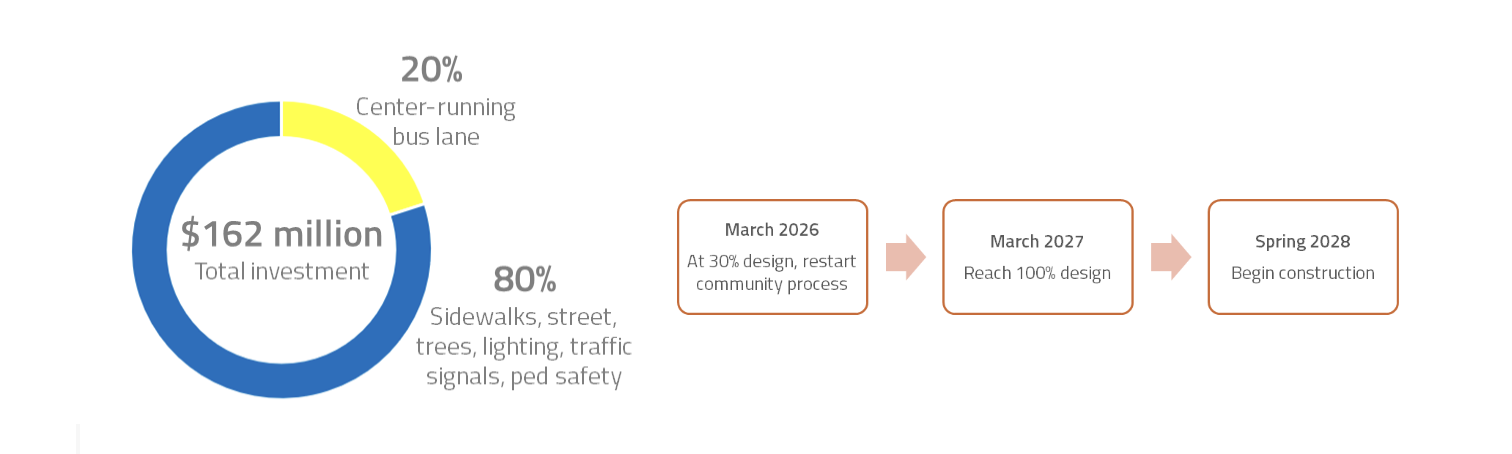
- The Blue Hill Avenue Reconstruction Project is a community investment of $162 million for a complete reconstruction of Mattapan Square itself and 3.1 miles of Blue Hill Avenue from Mattapan Square to Grove Hall.
- Only 20% of the budget will be used for center-running bus lanes, while 80% is for pedestrian safety and streetscape improvements, including all new street lighting. The center-running bus lane design is required in order to gain access to 90% of the project funding.
- The design is currently at 30% design, leaving an opportunity to restart the community process to refine design details while advancing to 100% in about a year’s time. Construction is not anticipated to begin until 2028.
Safety and Streetscape Improvements
- All new sidewalks and curb-ramps, upgrading everything to full ADA accessibility compliance
- Safer pedestrian crossings and 24 new pedestrian crossings
- A redesign of the roadway to include center-running bus priority lanes
- 200 new street trees and significant landscaping improvements
- All new street lighting, including decorative street fixtures in the business districts
- Green infrastructure upgrades, such as rain gardens
- Public Art
- Upgraded traffic signals at 33 locations
- Repaving of the entire corridor
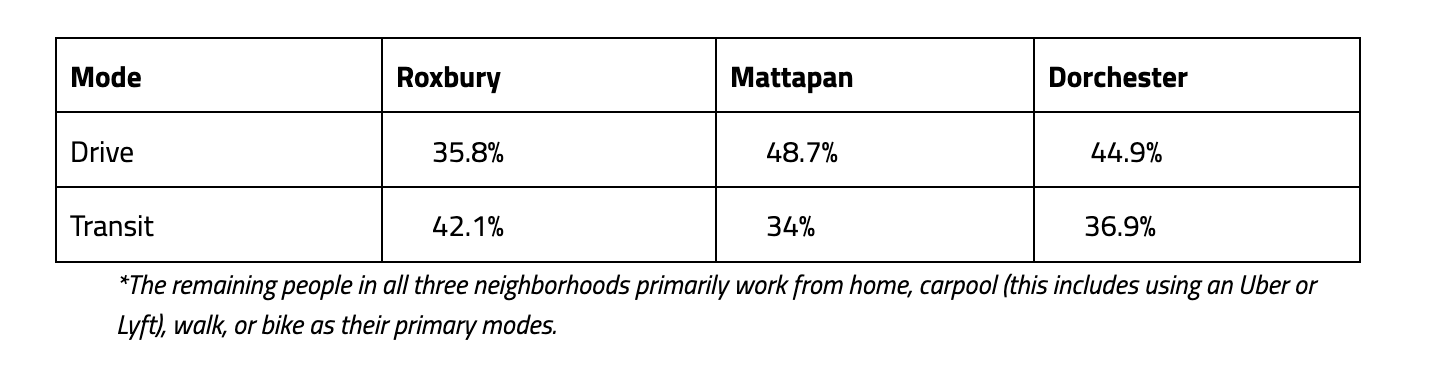
Modes of Travel in Neighborhoods along Blue Hill Avenue
 Key Takeaways
- When combined, Roxbury, Dorchester, and Mattapan have a reasonably even split between people driving and taking transit, but the needs and usage vary substantially along the corridor.
- There is also a high percentage of users who walk as their primary mode of transportation, elevating the need to prioritize safety-related improvements.
- The percent of people reliant on carpooling is also an indicator of transit demand. Additional surveying would be helpful to fully understand the needs of these individuals. However, carpooling often indicates that the individual can’t drive (they might be older, have a disability that prevents them from driving, and/or be too young to drive), doesn’t have access to their own car, and/or doesn’t have access to reasonable or reliable transit options.
Impact of Transit Improvements
- Faster buses would positively impact the lives of 40,000 daily bus riders on this corridor. More than half of the people traveling on Blue Hill Ave during peak times are on a bus (the other half driving), which is more than any other corridor in the City.
- Each bus would save 10-15 minutes during peak hours. Adding up all the time savings for all the bus riders, you get over 6000 total hours of people’s travel time saved per day.
- Fully separated bus lanes make each trip more predictable, which allows the MBTA to run much more reliable service– it is much easier for the MBTA to run buses on schedule and prevent buses from getting bunched together.
- Faster buses will allow the MBTA to run more frequent service with the same number of buses because each bus can make its round trip faster and therefore run more trips per day.
- Better bus service is projected to attract over 2,000 more daily bus riders and reduce car trips.
What We've Heard
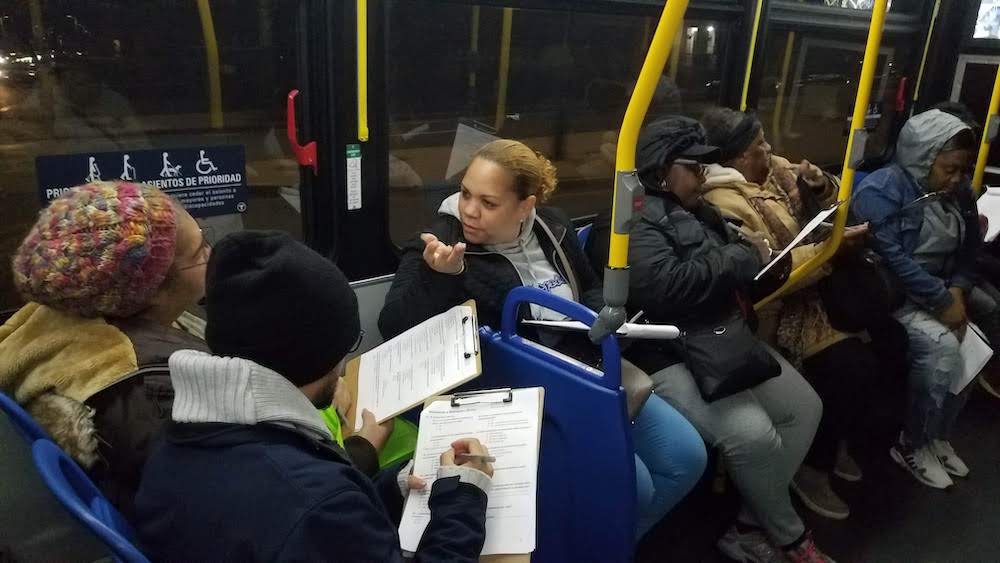
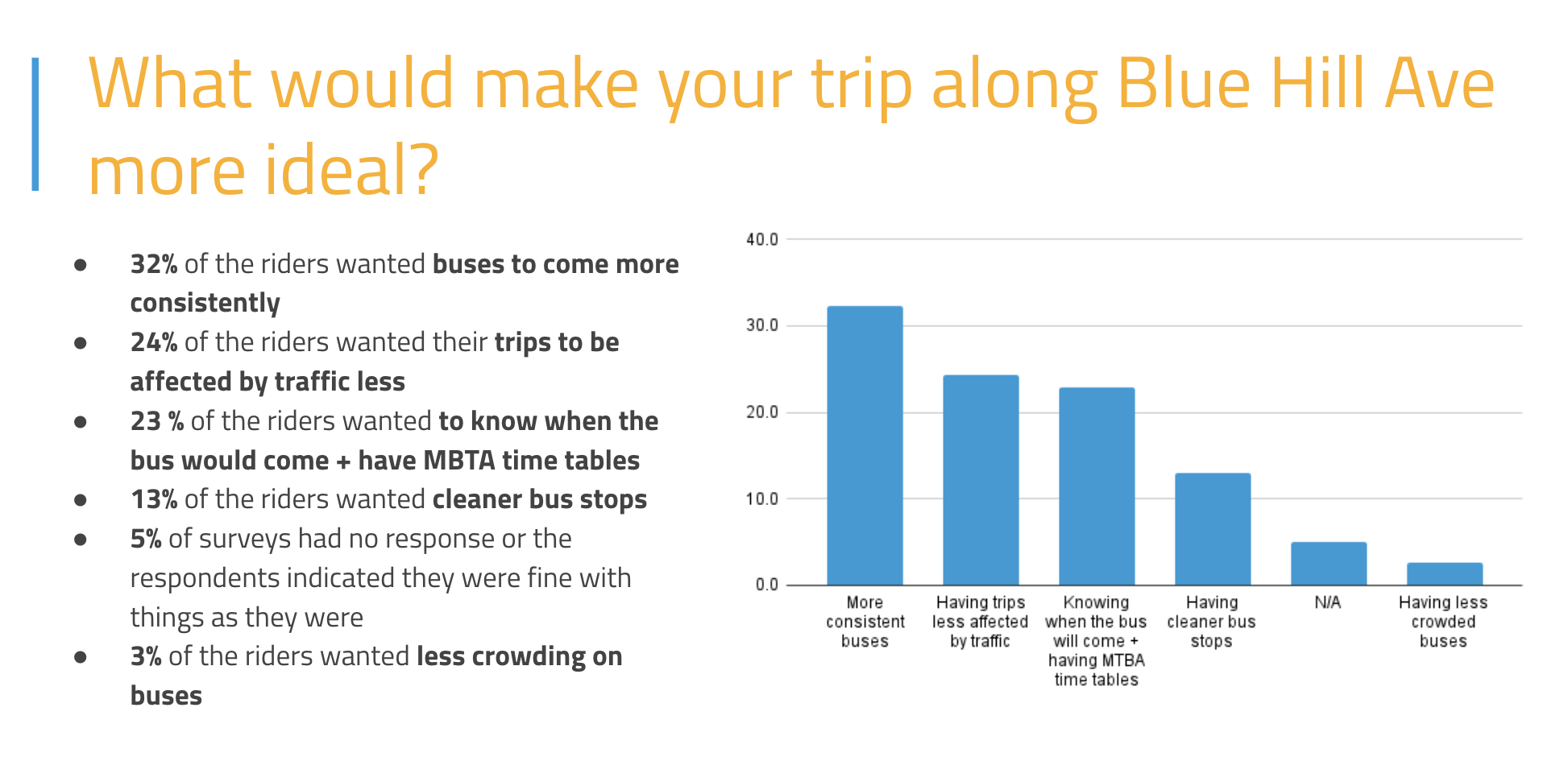
In Spring 2023, LivableStreets Alliance led a team of Street Ambassadors to engage bus riders and gather feedback on their experiences traveling along Blue Hill Avenue. The team spoke with more than 700 people and collected 520 surveys in English, Spanish, and Haitian Creole from individuals who primarily rely on walking and the bus to get around.
Riders consistently highlighted challenges with bus service:
- 32% said their biggest concern was unreliable wait times
- 24% said buses are too slow and often stuck in traffic
Beyond transportation, respondents also expressed a strong desire for more seating, better street lighting, and increased trees and green space along the corridor.
A City of Boston community survey question asked residents in the Mattapan-Lower Dorchester area whether they support the Blue Hill Avenue project, 48% were in favor, and 31% opposed, indicating that the community support for the project is much higher than is perceived. But of the 60% who were in favor, 31% expressed “strong support”, and of the 31% opposed, 22% expressed “strongly oppose,” indicating that the project is very polarizing.
While the center-running bus lane has been a point of debate, the engagement process revealed important areas of shared agreement:
- A need to improve safety for all road users
- The importance of protecting residents and local businesses
- A shared vision for a thriving civic and commercial corridor along Blue Hill Avenue
Resources
- Blue Hill Avenue Project Brief
- Blue Hill Avenue Process & Leadership
- Blue Hill Avenue Modes of Travel
- With a number of plans (listed below) proposing transportation and land use changes along this corridor, this is an important time for community members to advocate for their needs.
- Plan Mattapan (Mattapan Sq)
- Cummins Highway
- Plan Dudley
- GoBoston 2030 projects -- including improvements to Blue Hill Ave
- There are many bus routes along Blue Hill Ave: the 28 along carries 20,000 people every weekday. An average of 51% of riders on these routes are transit dependent, meaning they have limited choices about how to get around.
- Based on MBTA data, 7 miles of streets are holding back a whopping 92,000 riders, 15% of all bus passengers. One of these key bottlenecks is Blue Hill Ave.
Corridors with Comparatively High Rates of Weekday Bus Passenger Delay

How can you get involved?

- Do you want to advocate for improvements on your street? Sign up to be a Street Ambassador!
Street Ambassadors are members of the community who receive training in transportation advocacy. They bring the planning process into the community, talk with community members to understand their needs, concerns, and questions, and share that information with the City and the MBTA.